Institutional licensing
Rounds
for your whole class.
Give every student daily diagnostic practice that supports Step 1, clerkship Shelves, and Step 2—built so they reason through cases, not copy answers from a chatbot.
- Step 1 → Shelves → Step 2
- Reasoning over shortcuts
- No LMS integration required
Students from 40+ medical schools already use Rounds on their own—licensing makes that access universal for your class.
School names reflect student signups for informational purposes and do not imply endorsement.
Anki builds recall.
Rounds builds the diagnosis.
Your students can memorize First Aid and still freeze on a vignette. Rounds trains the missing skill—pattern recognition under progressive clinical clues—in five-minute sessions they choose to repeat.
For schools, that is a curriculum complement—not another mandatory portal—that strengthens the diagnostic habits students need from preclinical years through clerkships.
Students already want it
Organic adoption across 40+ schools means you are licensing demand, not inventing it.
Complements Anki + QBanks
Rounds sits between flashcards and UWorld/AMBOSS—diagnosis first, then full-length questions.
Value past Step 1
Practice tools—differentials, calculators, illness scripts—stay useful on Shelves, Step 2, and the wards.
Why schools invest
You are measured on Step 1, Shelves, and Step 2. So is your class.
Institutional success is inseparable from how students perform on high-stakes exams and how ready they feel on the wards. Rounds is built as a continuous diagnostic habit across that arc—not a single-exam cram product.
Step 1
Pattern recognition under pressure
First Aid–aligned cases train students to connect clues to diagnoses—the skill vignette-heavy exams reward—without replacing your QBank strategy.
Shelf exams
Clerkship thinking, daily
Differential builder, illness scripts, and clinical calculators mirror what students need on rotations and specialty Shelves—not just preclinical flashcards.
Step 2
Clinical reasoning that compounds
The same diagnostic habits scale into Step 2 CK: prioritize findings, rank differentials, and decide next steps with less hesitation.
Rounds does not replace UWorld, NBME forms, or your curriculum. It strengthens the clinical reasoning layer those assessments assume students already have.
Reasoning, not shortcuts
Schools are right to worry about mindless AI study.
When students paste a vignette into a chatbot, they can get an answer without building the judgment that exams—and patients—require. That is a real risk for medical education.
Rounds is designed the opposite way: students must generate differentials, weigh clues, and commit before the full picture is revealed. Multiple modes of practice force thinking from different angles—not one-tap answers.
Progressive clinical clues
Information unlocks in stages. Students practice committing with incomplete data—the same pressure as a real vignette or bedside presentation.
Multiple ways to reason
Case play, differential challenge, illness scripts, and calculators train recognition, ranking, and next-step thinking—not a single chat transcript.
Feedback that teaches, not spoils
Misses become weak spots and study plans. The loop is deliberate practice: try, see where you slipped, return with a plan.
No “paste vignette → diagnosis” product
Rounds is not an answer engine. It is a gym for clinical reasoning—built so the hard part stays with the student.
Equity by default
A class license means every student gets the same tools—not only those who can pay out of pocket for another subscription.
Engagement without mandates
Gamified daily cases drive voluntary use. You are not adding another tracked assignment students resent.
Complements your curriculum
Rounds does not replace lectures, small groups, or your QBank plan. It fills the diagnostic-practice gap between them.
What an institutional deal looks like
One partnership. Every student covered.
We keep licensing intentionally simple: you tell us your class size and timeline, we send a clear annual quote, and your students get premium access with their school email. No feature menus. No seat-by-seat admin console to babysit.
Class-wide seats
Coverage for a cohort or full student body for the academic year. Priced by class size—not per feature.
Full product access
500+ First Aid–aligned cases, game modes, Practice tools, weak-spot study plans, and progress tracking.
School-email unlock
Students authenticate with your institutional domain. No SSO project, no LMS plugin, no IT ticket storm.
Launch pack
Announcement copy, onboarding walkthrough, and a kickoff call so student leaders can get the class online fast.
Dedicated partnership contact
A real person for renewals, student issues, and feedback—not a support form that disappears into a queue.
Aggregate insights (roadmap)
Privacy-respecting class engagement and category performance views are in active development; early partners help shape them.
Typical starting point
Annual class license for a preclinical cohort, billed once per academic year. Exact pricing depends on headcount and whether you want a single class or multi-year campus agreement.
Next step
Get a quote for your class sizeDeployment
From first email to class access—fast.
Built for medical school timelines: light IT, clear paperwork, and a rollout students can finish between lectures.
- 01
Share class size & goals
A short call or email: cohort size, academic calendar, and who champions the rollout (curriculum, student affairs, or student government).
- 02
Receive a clear quote
We send annual pricing, what is included, and a simple agreement. No RFP theater required for a pilot class.
- 03
Students go live in days
Domain unlock + launch pack. Students download Rounds, sign in with school email, and start the daily case—usually within the same week.
The student product
What your class will actually open
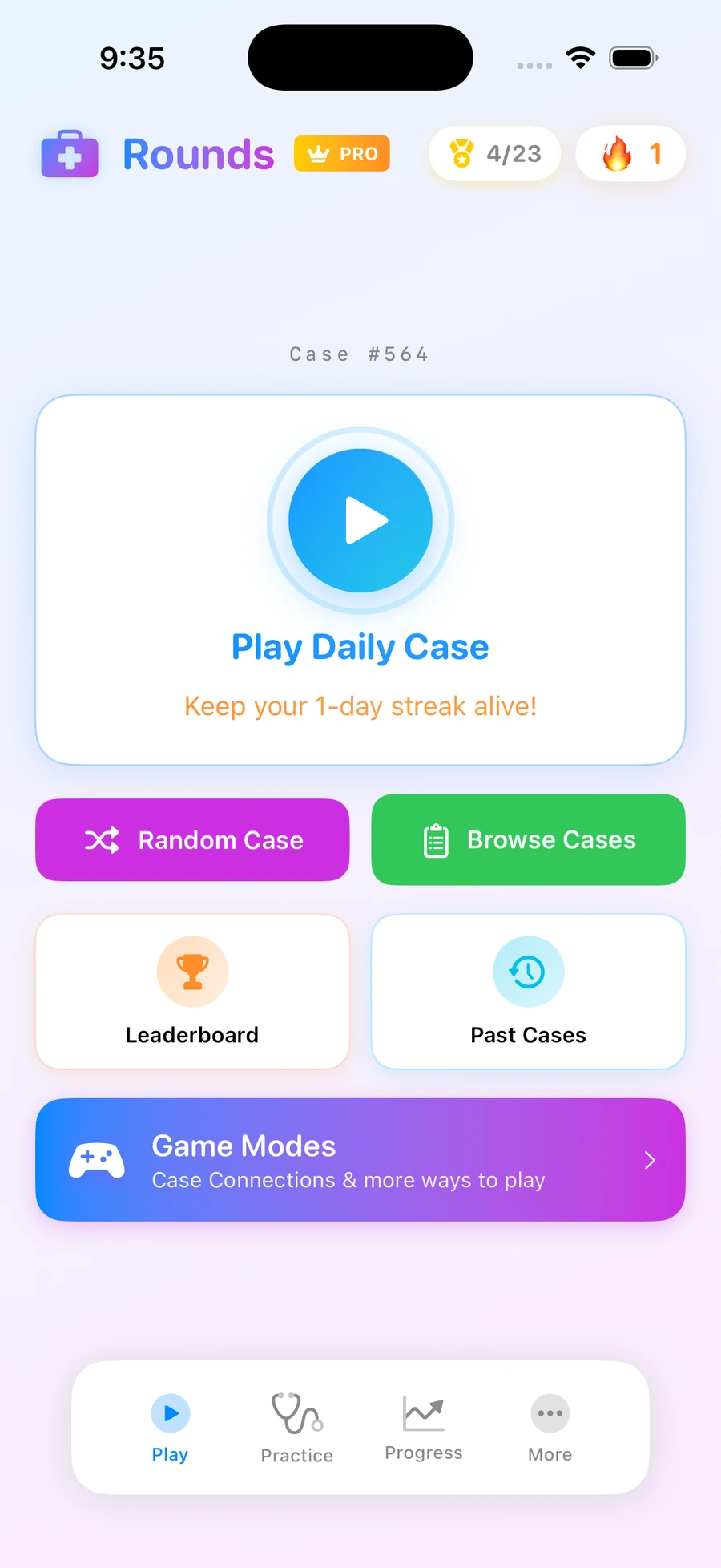
Not another dense portal—daily cases and clinical tools designed for the five minutes between lectures.
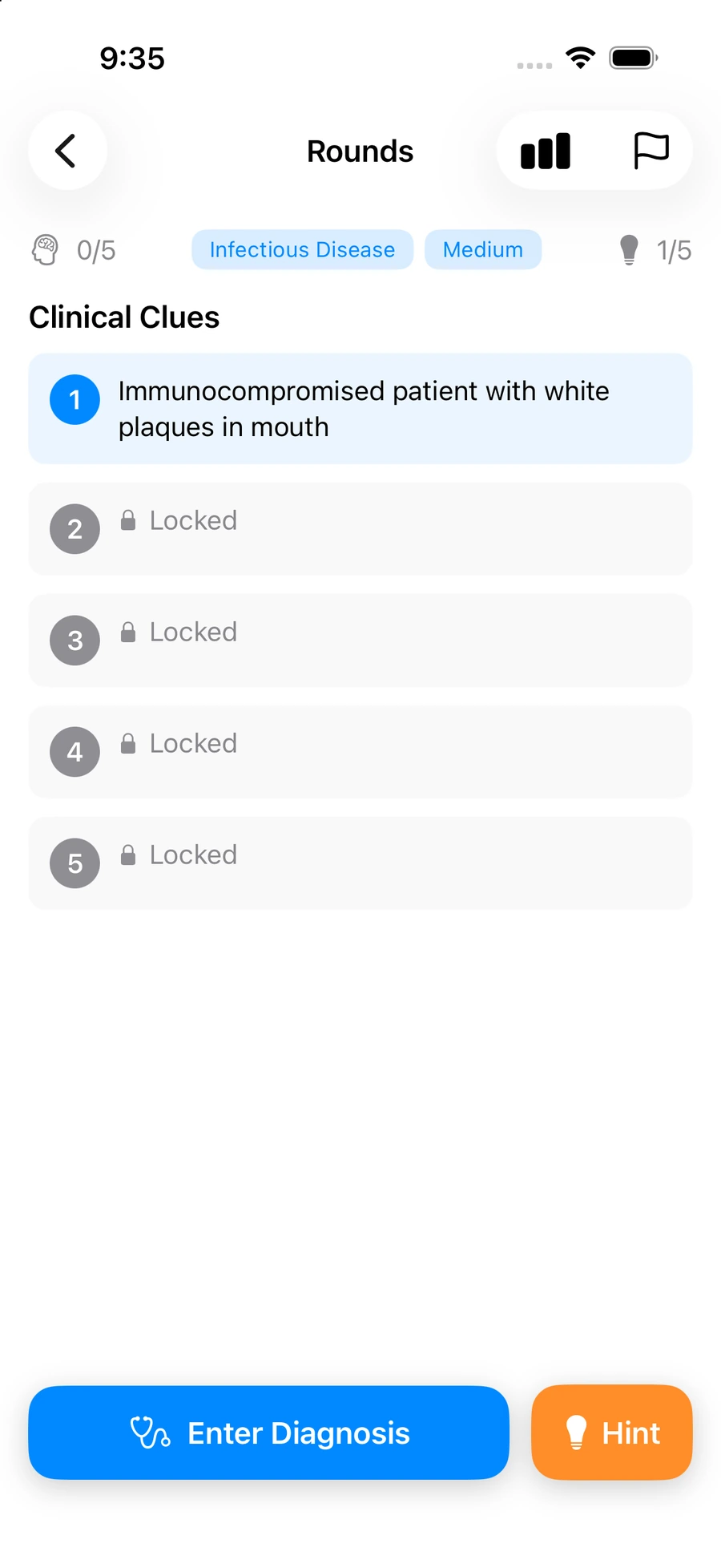
Clinical clues
Progressive reveals that train real diagnostic intuition.
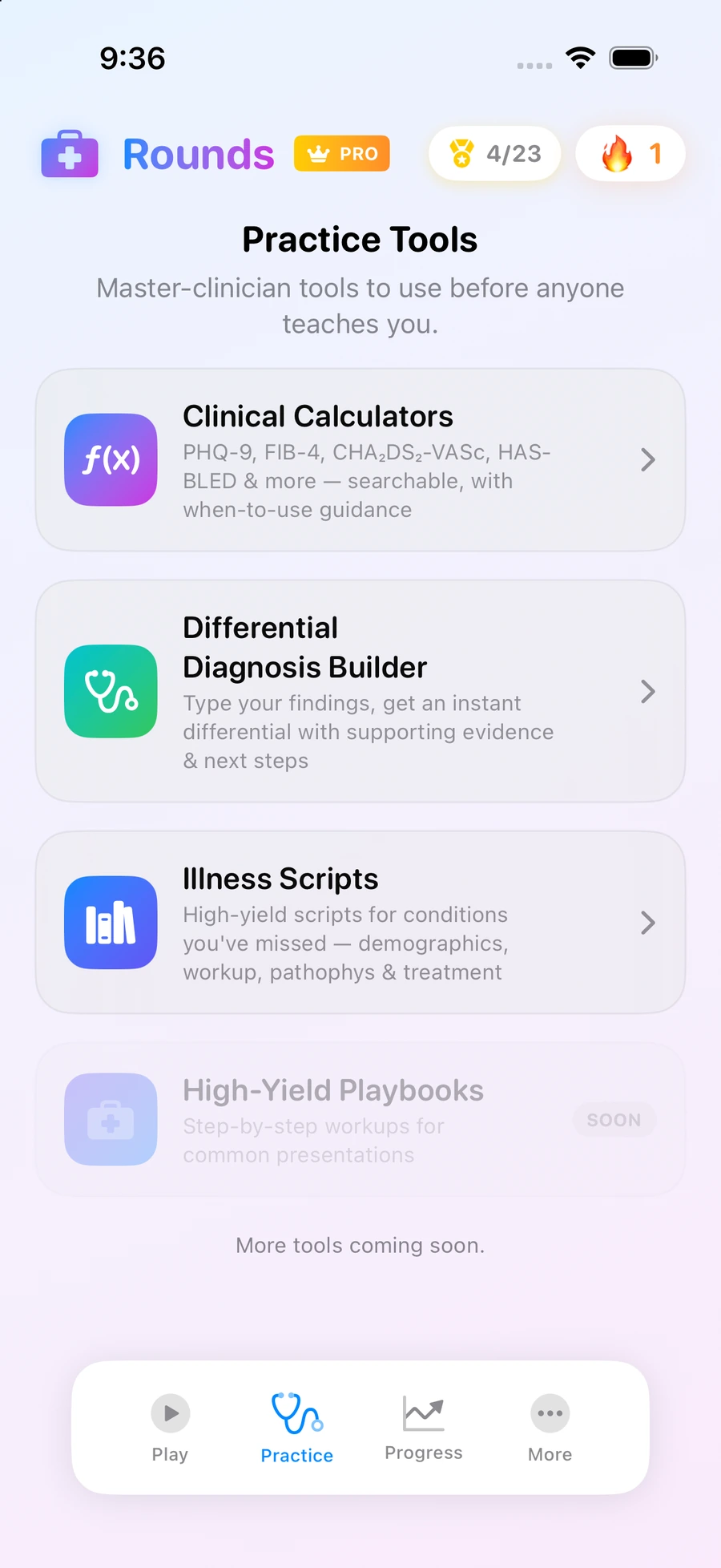
Practice tools
Calculators, differentials, and illness scripts for clerkships.
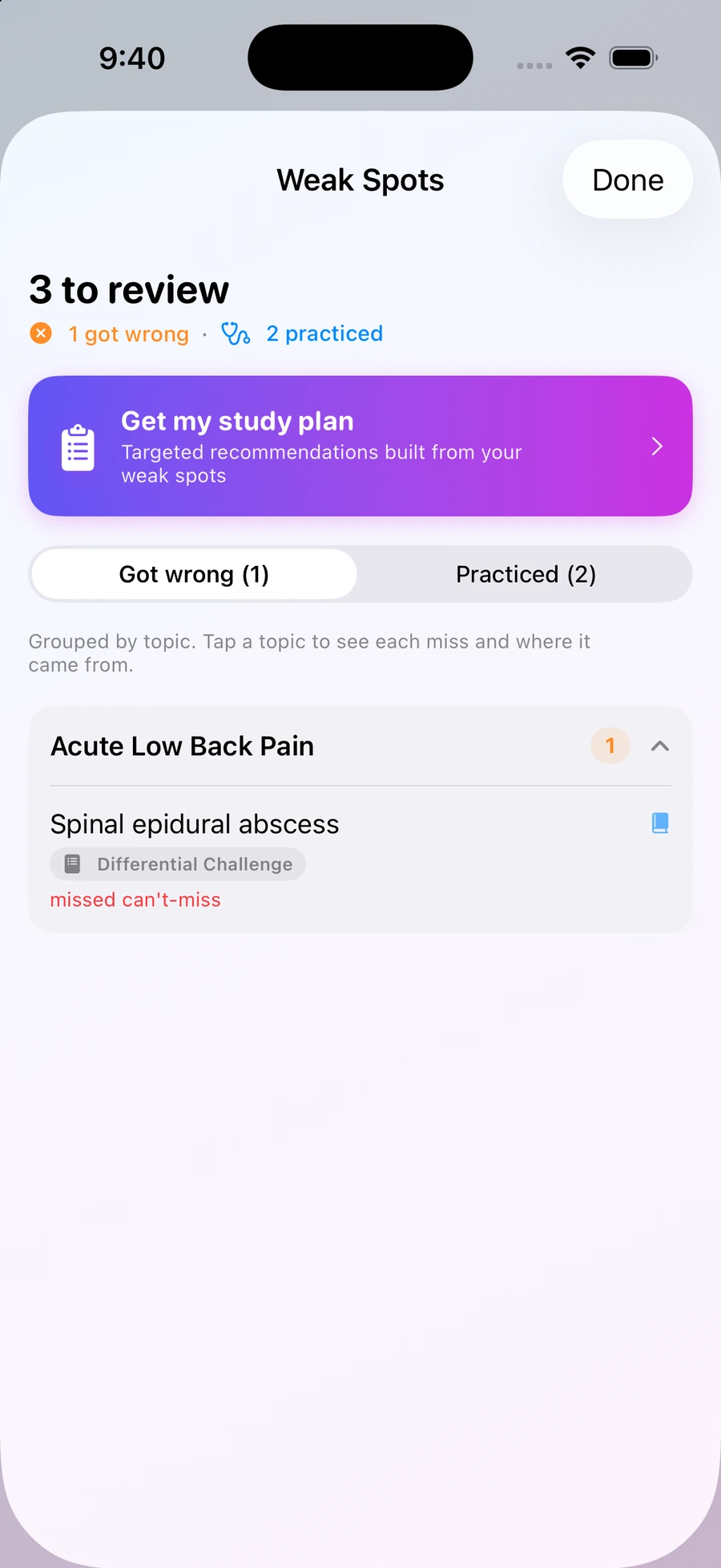
Weak spots
Misses become targeted study plans students can act on.
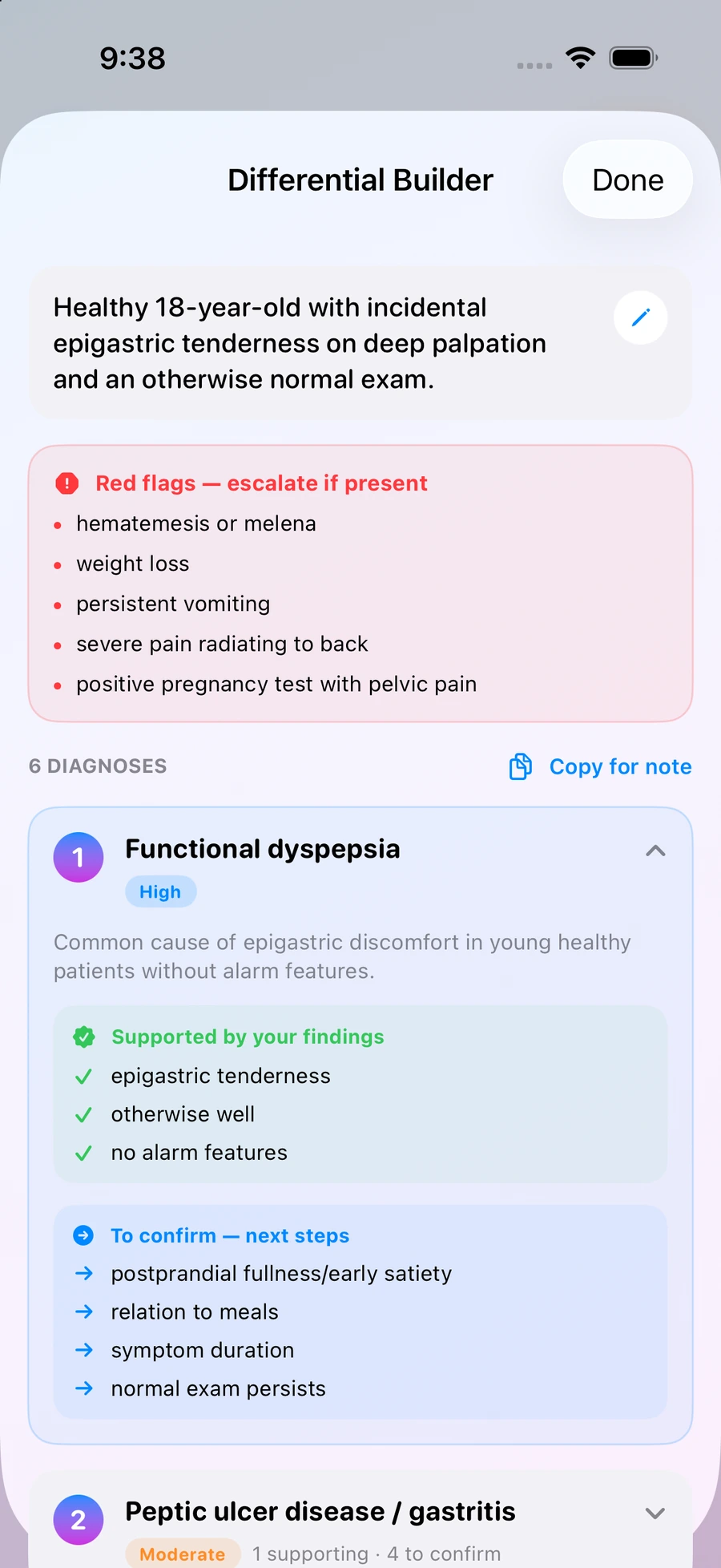
Differential builder
Findings in → ranked diagnoses, red flags, and next steps.
Built for the people who champion student success
Whether you own curriculum, student affairs, or the class budget—Rounds is the rare resource students thank you for buying.
Curriculum leaders
Strengthen diagnostic readiness for Step 1, Shelves, and Step 2 with practice that complements—not competes with—your curriculum.
Student affairs
Support success and wellbeing with a tool students open voluntarily—and that rewards real reasoning over AI shortcuts.
Student government
Bring a class gift / wellness fund purchase that classmates actually use and share organically.
FAQ
Questions schools ask before they buy
Step 1: First Aid–aligned cases build vignette-style pattern recognition. Clerkships / Shelves: Practice tools (differentials, calculators, illness scripts) mirror rotation thinking. Step 2: the same diagnostic habits—ranking differentials and deciding next steps—compound into CK-style clinical reasoning. Rounds complements QBanks; it does not replace NBME forms or your exam strategy.
Start the conversation
Tell us your class size. We'll send a clear next step.
Quotes and walkthroughs are handled by the Rounds team—usually within 1–2 business days. No commitment required to ask.
- Response within 1–2 business days
- No commitment to request pricing or a demo
- Prefer email? support@braskgroup.com